Cold calling has always been one of the most demanding sales activities, and working through large call lists on MojoSells can amplify both the pressure and the opportunity. You hear “no” far more often than “yes,” and without the right mindset, rejection can feel personal, draining, and demotivating. But when approached correctly, rejection becomes one of the most valuable feedback tools in your sales process.
Top-performing cold callers do not succeed because they avoid rejection. They succeed because they understand it, prepare for it, and use it to refine their approach. Every objection contains insight into a prospect’s situation, priorities, and emotional state. When you learn how to listen for those signals, rejection stops being discouraging drama and starts becoming useful data.
Reframing Rejection as Part of the Process
The first shift every cold caller must make is mental. Rejection is not a verdict on your ability, your value, or your professionalism. It is simply a response to timing, circumstances, or lack of context. Most prospects are not rejecting you personally; they are reacting to interruption, previous bad experiences, or uncertainty.
When you expect rejection as a natural part of prospecting, it loses its emotional sting. Instead of trying to “win” every call, your goal becomes gathering information, opening micro-conversations, and leaving a positive impression. This mindset alone can dramatically improve your tone, confidence, and resilience on the phone.

Why Preparation Changes Everything
Preparation is the difference between sounding reactive and sounding confident. When objections catch you off guard, your voice tightens, your pacing speeds up, and your responses feel defensive. When you prepare in advance, you remain calm and conversational, even under pressure.
Preparation does not mean memorizing robotic scripts. It means understanding the intent behind common objections and having flexible responses that acknowledge the prospect’s concern while gently guiding the conversation forward. This approach keeps you in control without sounding pushy or rehearsed.
Turning Objections into Opportunities
Every objection reveals something important. A prospect who says “I’m not interested” may be overwhelmed, distracted, or simply unsure why they should care. Someone who says “You’re the fifth person who’s called today” is signaling high market activity and possible motivation, even if they sound annoyed. A prospect who already has an agent is often testing whether you respect boundaries.
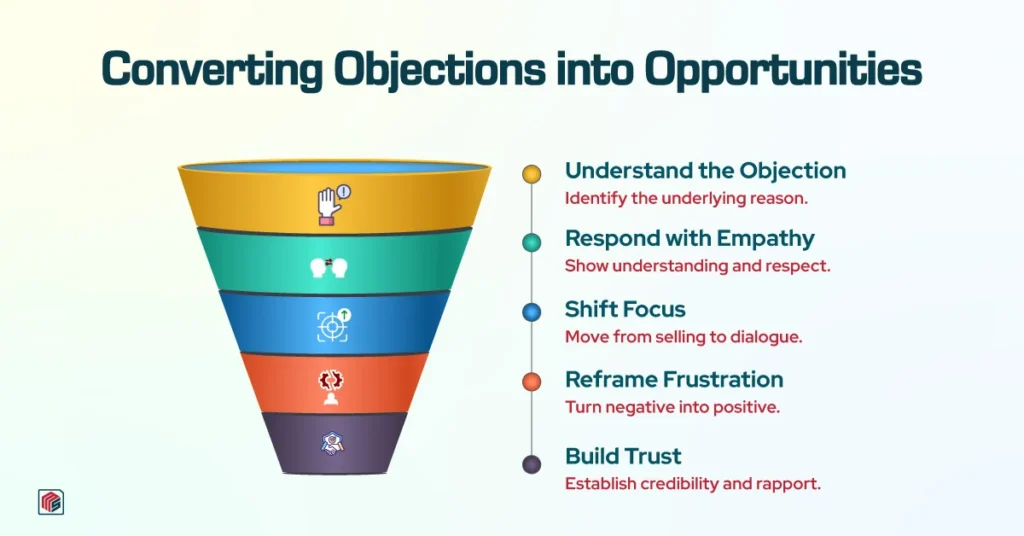
Instead of shutting the conversation down, these objections can become doorways to meaningful dialogue when handled with empathy.
For example, when a prospect says, “I’m not interested,” a calm response such as, “Totally understand. Just curious, do you have any plans for your home this year?” shifts the focus away from selling and toward understanding. You are not challenging their statement; you are inviting them to share context.
When you hear, “You’re the fifth person who’s called today,” responding with, “I hear that a lot. That’s actually a good sign because your property has real potential. Have you considered taking advantage of this interest?” reframes the frustration into an opportunity without dismissing their experience.
If a prospect says, “I already have an agent,” acknowledging that relationship with, “That’s great. I’m not here to interfere. I just wanted to offer a second opinion if your plans change,” builds trust. It positions you as a resource rather than a threat.
These types of responses keep conversations alive while respecting the prospect’s autonomy.
Listening Is More Important Than Talking
Many cold callers focus so heavily on what to say next that they forget to truly listen. Objections are often layered. The words a prospect uses are only part of the message; tone, pacing, and emotion matter just as much.
When you slow down and listen, you can respond to what the prospect actually means rather than what they literally say. This makes your responses feel natural and relevant instead of scripted. It also helps you decide when to continue the conversation and when to gracefully exit while leaving the door open.
Role-Playing to Build Real Confidence
Confidence on the phone is built before the call ever starts. One of the most effective ways to develop this confidence is through regular role-playing. Practicing objection scenarios with a teammate or accountability partner allows you to test different responses in a low-stakes environment.
Role-playing helps you internalize your scripts so they sound conversational rather than memorized. It also exposes weak spots in your delivery, such as rushing through objections or failing to pause after a response. Over time, this practice builds verbal agility, allowing you to adapt naturally while staying aligned with your core message.
Using Call Recordings as a Training Tool
One of the most valuable yet underused features of MojoSells is call recording. Listening to your own calls can be uncomfortable at first, but it is one of the fastest ways to improve. Recordings reveal habits you may not notice in real time, such as talking too fast, interrupting prospects, or missing cues to ask better questions.
Reviewing successful calls is just as important as reviewing failed ones. Pay attention to phrasing, tone, pacing, and moments where rapport was established. These insights can be shared during team training sessions or used in one-on-one coaching to build consistency across your sales process.
Managing Emotional Fatigue
Cold calling is as much an emotional exercise as it is a technical one. Hearing repeated rejection without proper recovery strategies can lead to burnout. Top performers manage this by setting realistic call goals, taking short breaks, and separating outcomes from effort.
Instead of measuring success only by appointments booked, track metrics such as quality conversations, objections handled calmly, or follow-up opportunities created. This broader definition of success keeps motivation high even on difficult days.
Following Up with Purpose
Not every call will convert immediately, and that is okay. Rejection often means “not right now” rather than “never.” When handled professionally, objections create opportunities for future follow-up. Notes taken during calls, such as timing concerns or personal circumstances, can guide thoughtful re-engagement later.
A respectful follow-up strategy shows persistence without pressure and reinforces your credibility over time.
Mindset Is the Real Differentiator
At its core, cold calling success is driven by mindset. When you see rejection as failure, it drains your energy. When you see it as feedback, it sharpens your skill. Every objection is a clue, every call is practice, and every conversation moves you closer to mastery.
By preparing for objections, practicing through role-play, leveraging call recordings, and maintaining a healthy sales mindset, you transform rejection into one of your strongest growth tools. In the long run, it is not the number of “no’s” you hear that determines success, but how effectively you learn from them and keep moving forward